
How Many People Can A Mini Capsule Hotel Accommodate?
Oct 30, 2026
Leave a message
How Many People Can a Mini Capsule Hotel Accommodate?
When planning a capsule hotel, one of the first questions buyers need to answer is how many guests each unit can accommodate. The answer affects far more than the number of beds. It also influences the interior layout, available floor space, privacy, ventilation, and the overall guest experience.
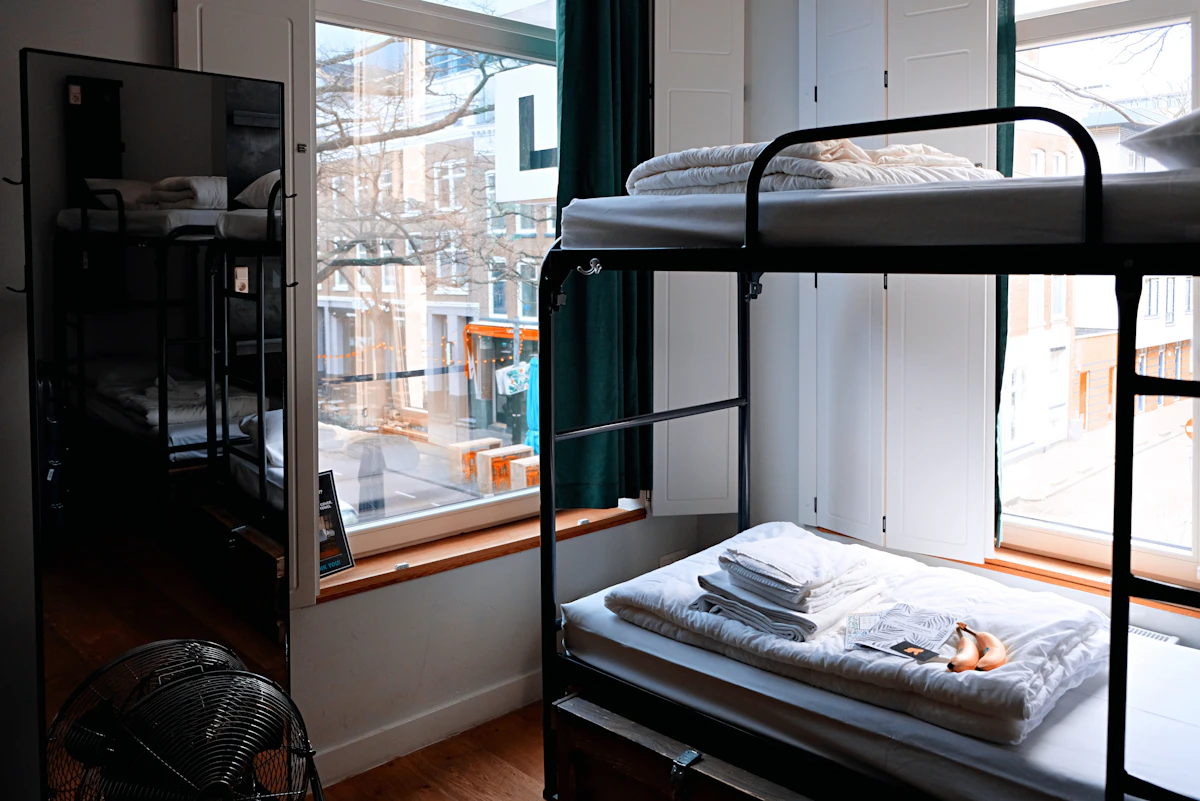
For hotel developers, hostel operators, and investors looking to make better use of limited space, choosing the right capsule design is an important part of the planning process. A well-designed unit should provide a comfortable sleeping area while making efficient use of the available floor space.
So, how many people can a capsule hotel accommodate? It depends on the type of unit, its dimensions, and the intended layout. Understanding these factors can help buyers select suitable products for their projects and avoid overcrowding.
1. What Determines the Capacity of a Capsule Hotel?
Unlike conventional hotel rooms, capsule accommodation is designed around compact, individual sleeping spaces. Each capsule typically provides a bed, personal lighting, ventilation, and selected features for privacy and convenience.
However, the number of guests a capsule hotel can accommodate is not determined by the size of an individual capsule alone. Buyers also need to consider the arrangement of the units and the facilities available in the building. Several factors affect the overall capacity:
Capsule Dimensions
Length, width, and height determine usable sleeping area and space for belongings while ensuring comfortable headroom.
Single or Double Occupancy
Some designs target solo travelers, while larger configurations accommodate two people if dimensions permit.
Single-Level or Stacked
Vertical stacking increases units per square meter while accounting for stairs, ladders, and clearance.
Shared Facilities
Bathrooms, lockers, and reception areas determine whether high guest density remains operational and comfortable.
2. Choosing the Right Capsule Size for Your Project
Different capsule sizes serve different purposes. Rather than selecting the smallest available model, buyers should begin with their target customer group, expected length of stay, and available building space.
Compact Single-Occupancy Capsules
Compact capsules are suitable for travelers who primarily need a private place to sleep. Common applications include budget hostels, airport accommodation, railway stations, and short-stay facilities. These units are designed to make efficient use of floor space. A typical layout may include a single bed, a reading light, a power outlet, ventilation, and a privacy curtain or door, depending on the product specification. For operators targeting solo travelers, a compact single-occupancy model can be a practical starting point.
Larger Individual Capsules
Some projects require more room for luggage, sitting space, or additional amenities. In these cases, a larger capsule may provide a better balance between space efficiency and comfort. Possible features include additional storage, improved sound insulation, integrated lighting controls, and upgraded ventilation. The availability of these features depends on the manufacturer's design and customization options. Although larger capsules may reduce the number of units that fit within a given area, they can help create a more comfortable experience for guests staying overnight or using the accommodation regularly.
Double-Occupancy Capsule Designs
A capsule intended for two guests needs to be designed around the actual sleeping arrangement and the space required for safe access. Buyers should confirm bed dimensions, usable interior space, ventilation provisions, entry clearance, and the manufacturer's stated occupancy. They should also check whether the proposed configuration meets the requirements of the destination market. For many projects, separate single-occupancy capsules may provide greater flexibility than attempting to accommodate two people in a unit designed primarily for one.
3. How Stacking Capsules Can Increase Capacity
Floor space is often one of the biggest constraints in a capsule hotel. In busy city centers and transportation hubs, the cost of renting or developing a property can make efficient space planning especially important.
Stackable capsule designs allow operators to arrange sleeping units on multiple levels rather than using the entire floor area for individual beds. A two-level arrangement can increase the number of sleeping spaces within a suitable footprint. More complex layouts may use additional levels, but the feasibility depends on the building's ceiling height, the capsule design, structural support, access arrangements, and local regulations.

Checklist Before Selecting a Stacked Configuration:
- ✔ The external and internal dimensions of each capsule
- ✔ The required clearance between units and the ceiling
- ✔ Access to upper-level sleeping spaces
- ✔ Structural loads and installation requirements
- ✔ Ventilation and heat management
- ✔ Emergency access and escape routes
- ✔ Maintenance access for lighting and electrical components
Stacking should be planned as part of the complete installation rather than treated as a simple way to add more beds. A practical design must make efficient use of the building while maintaining safe access and a comfortable environment. For manufacturers, providing clear dimensional drawings and installation information helps buyers assess whether a proposed arrangement will work in their intended location.
4. What Features Make a Capsule Comfortable?
A high-capacity layout is only valuable if guests can use the accommodation comfortably. In compact hospitality environments, seemingly small design decisions can have a noticeable effect on the overall experience:
Ventilation
Capsules should provide an appropriate means of air circulation. The ventilation approach depends on the enclosure design, the surrounding room, the climate, and the intended occupancy. Buyers should confirm the available ventilation configuration and how it integrates with the building's overall air-handling system.
Lighting
Individual reading lights and accessible controls allow guests to use their sleeping spaces without unnecessarily disturbing others. Indirect lighting can also make the interior feel more inviting.
Privacy
Curtains, sliding doors, or other enclosure options can help guests feel more comfortable in shared accommodation. The appropriate solution depends on the product design, accessibility requirements, and fire-safety considerations.
Storage
Small compartments, shelves, and personal storage areas help prevent luggage and belongings from obstructing access. The amount of storage should reflect the expected length of stay and the type of traveler the property serves.
Noise Control
Sound insulation and thoughtful unit placement may help reduce disturbances between sleeping spaces. Buyers should consider both the capsule construction and the noise conditions within the building.
Electrical Convenience
Power outlets and USB charging options are useful for modern travelers. Their placement should be practical, accessible, and compatible with the electrical requirements of the destination market.
These features can be specified during the procurement process. For operators purchasing multiple units, agreeing on a consistent set of standard features can simplify ordering, installation, and future maintenance.
5. How to Plan a Capsule Hotel for Groups and High Guest Turnover
Not every capsule hotel serves the same type of customer. Some primarily accommodate solo backpackers, while others focus on airport passengers, business travelers, or visitors who need a place to rest for a few hours. The intended customer group should influence the layout and the choice of capsule model.
For example, a transit accommodation facility may prioritize efficient access, easy cleaning, luggage storage, and short-stay convenience. A city hostel may place greater emphasis on privacy, personal storage, and a comfortable sleeping environment.
Properties serving large groups may need to arrange capsules in clusters or separate sleeping zones. This can make it easier to organize bookings, manage different guest groups, and keep shared areas accessible.
For multi-unit projects, buyers should also consider the supporting facilities required for the expected number of guests. Toilets, showers, handwashing facilities, reception areas, and circulation routes all contribute to the property's usable capacity. A realistic occupancy plan should therefore combine the number of installed capsules with the capacity of the building's supporting infrastructure.
6. Why Modular Capsule Design Matters for Commercial Buyers
For hotel developers and hospitality investors, modular construction can simplify the process of specifying and installing multiple sleeping units.
A modular approach allows manufacturers to develop repeatable product configurations that can be produced in a controlled factory environment. Depending on the design, selected components may be assembled before delivery, reducing the amount of work required at the installation site. Potential advantages include:
- BENEFIT Consistent product dimensions: Standardized designs make it easier to plan layouts and coordinate multiple units.
- BENEFIT Repeatable production: Approved configurations can be used as a basis for additional orders.
- BENEFIT Customization options: Selected materials, finishes, lighting, storage, and other features may be adjusted to meet project requirements.
- BENEFIT Simplified procurement: Ordering multiple units from one manufacturer can make specifications and delivery arrangements easier to coordinate.
- BENEFIT Flexible project planning: Buyers can evaluate different unit arrangements before confirming the final order.
The actual benefits depend on the degree of prefabrication, the product specification, the factory's capabilities, and the installation conditions. For buyers developing several properties or planning a phased rollout, it is useful to establish a standard capsule specification that can be repeated across different locations where the local requirements allow.
7. How to Choose Mini Capsule Hotel Manufacturers in China
Sourcing from China can give international buyers access to a broad range of prefab structures, modular accommodation products, and customization options. However, selecting the right supplier requires more than comparing photographs and quoted prices.
When evaluating China Mini Capsule Hotel suppliers, buyers should focus on the following areas:

- • Manufacturing capability: Ask whether the factory has experience producing capsule accommodation units or similar prefabricated structures. Request drawings, specs, and photos.
- • Product customization: Confirm if the manufacturer can adjust dimensions, sleeping arrangement, exterior finish, lighting, ventilation, and storage.
- • Materials & construction: Request info on frame, wall panels, interior finishes, and doors according to your operating conditions.
- • Quality inspection: Ask how the factory checks dimensions, assembly, electrical components, and finishes prior to shipment.
- • Packaging and shipping: Confirm shipping dimensions, packing arrangements, delivery terms, and required destination unloading gear.
- • Documentation & compliance: Check technical documentation for destination market fire safety, electrical systems, and accessibility.
Comparing Mini Capsule Hotel manufacturers against the same checklist helps importers and developers make a more informed decision and reduces the risk of unexpected differences between quotations.
8. Is a Cheap Mini Capsule Hotel the Best Option?
Price is an important consideration when purchasing multiple units, particularly for budget accommodation projects. However, the cheapest product may not always deliver the best overall value.
A lower-priced capsule may have a simpler interior, fewer integrated features, or a different material specification. Another model may cost more initially but include upgraded finishes, more convenient storage, or features that reduce the amount of additional work required after delivery.
| Evaluation Area | Cheap vs. Premium Capsule Considerations |
|---|---|
| Dimensions & Capacity | External dimensions, usable interior space, and intended occupants per unit. |
| Build & Materials | Frame structural rating, wall panel durability, and interior fire-retardant finishes. |
| Built-In Systems | Integrated ventilation fans, lighting controls, doors/curtains, and power/USB modules. |
| Logistics & On-Site Work | Packaging, container freight loading, on-site assembly work, and installation costs. |
| After-Sales Support | Warranty coverage, spare part availability, and technical assembly guidance. |
It is also important to distinguish between the price of an individual capsule and the total cost of a completed hospitality project. Building preparation, shared facilities, utilities, installation, and local compliance can all affect the final investment.
For B2B procurement, a detailed quotation based on a clear specification is more useful than a low headline price with limited information about what is included. The right purchasing decision is the one that meets the project's capacity, comfort, operational, and budget requirements.
9. How to Prepare for a Capsule Hotel Project
Before requesting quotations, buyers should define the basic requirements of the project. Even a preliminary brief can help manufacturers recommend a suitable configuration.
Start by identifying the intended location, the available building area, the expected number of guests, and the primary customer group. Next, decide whether the project requires single-occupancy capsules, larger units, stacked arrangements, or a combination of different configurations.
It is also helpful to establish the preferred level of customization. Some projects can use a standard model with minor adjustments, while others may require a more specific arrangement of sleeping areas, storage, lighting, or exterior finishes.
For larger orders, ask the supplier to provide dimensional drawings and a quotation that identifies the included components, optional upgrades, packaging, and delivery arrangements. Confirm the installation method and any site requirements before approving production. These steps can reduce unnecessary design changes and make it easier to compare suppliers on a consistent basis.
Conclusion
The number of guests a capsule hotel can accommodate depends on the capsule design, intended occupancy, layout, and supporting facilities. Compact single-occupancy units may be suitable for solo travelers and short stays, while larger or specialized configurations can serve different accommodation needs.
For commercial projects, successful planning involves more than maximizing the number of sleeping spaces. Ventilation, privacy, storage, access, maintenance, and applicable safety requirements all influence how well the property will operate.
Choosing the right Mini Capsule Hotel starts with a clear understanding of your target guests and available space. From there, buyers can compare dimensions, features, customization options, and total project costs before committing to an order.
Plan Your Capsule Hotel Layout & Get Factory Pricing
As a manufacturer of prefabricated pods, modular homes, and compact accommodation structures, we work with international buyers to discuss product configurations, project quantities, and customization requirements.
If you are planning a capsule hotel or sourcing units for distribution, share your target capacity, project location, and preferred specifications to request product information and a quotation.